Professional Skill Building: How Skillshare Free Trial Can Transform Your Career
In today's rapidly evolving job market, staying ahead means continuously developing new skills and refining existing ones. Whether you're looking to climb the corporate ladder, switch careers entirely, or simply become more valuable in your current role, professional skill building has never been more crucial. That's where Skillshare's free trial comes into play, offering an accessible gateway to thousands of courses designed to enhance your professional toolkit.
I remember when I first realized my design skills were holding me back from landing my dream marketing role. The job descriptions all mentioned Adobe Creative Suite proficiency, but my experience was limited to basic PowerPoint presentations. Sound familiar? This is exactly the kind of challenge that platforms like Skillshare are designed to address, and their free trial makes it possible to explore these opportunities without any upfront investment.

Understanding the Modern Skills Gap
The professional landscape has shifted dramatically over the past decade. According to recent studies, the half-life of learned skills is shrinking rapidly, meaning that what you learned five years ago might already be outdated. This creates both a challenge and an opportunity for working professionals.
Companies are increasingly looking for employees who can adapt, learn quickly, and bring diverse skill sets to the table. The traditional model of learning everything you need in college and coasting on that knowledge for decades simply doesn't work anymore. Instead, successful professionals are those who embrace continuous learning and actively seek out opportunities to expand their capabilities.
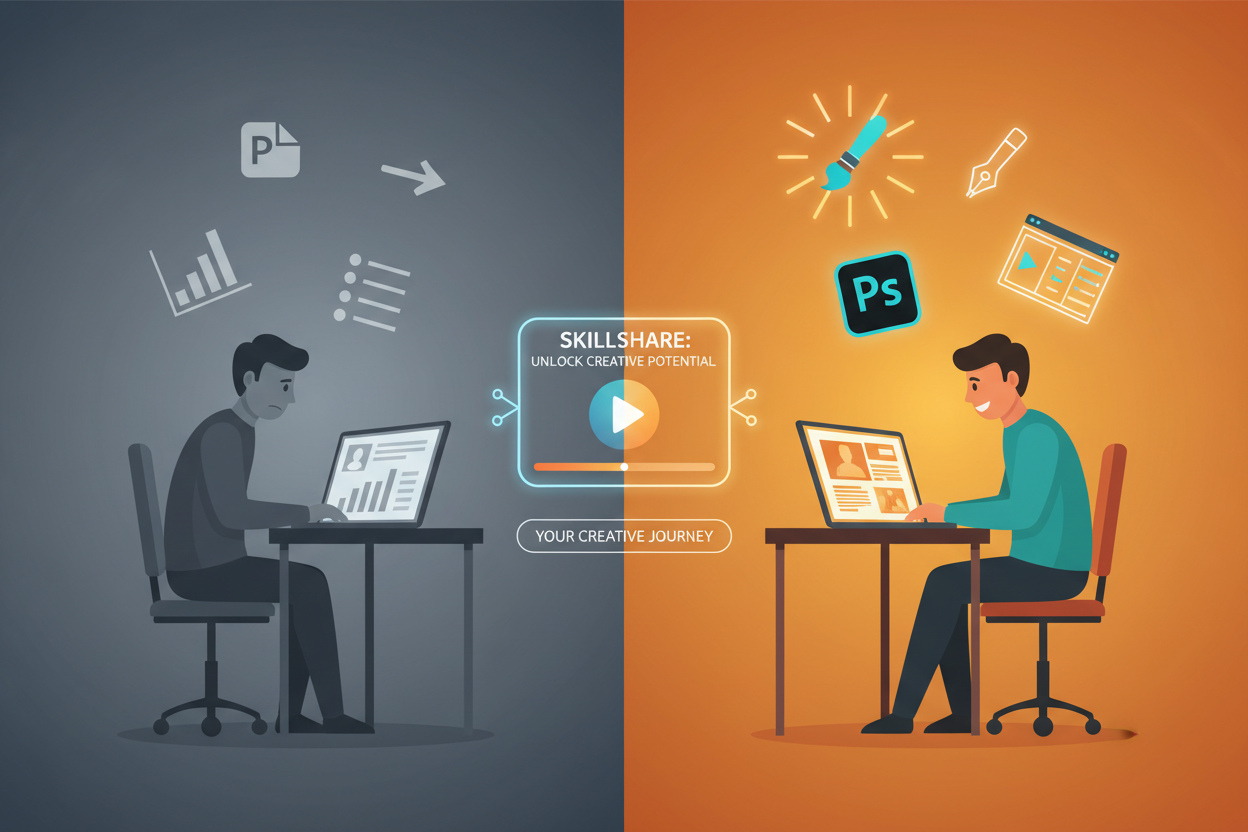
This is where the concept of micro-learning comes into play. Rather than committing to lengthy degree programs or expensive certification courses, professionals are turning to bite-sized learning opportunities that can be completed during lunch breaks, commutes, or weekend downtime. Skillshare's format aligns perfectly with this trend, offering courses that typically range from 30 minutes to a few hours.
What Makes Skillshare Different for Professional Development
Unlike traditional online learning platforms that focus heavily on academic subjects, Skillshare has carved out a unique niche in practical, hands-on skill development. The platform emphasizes learning by doing, which is particularly valuable for professional skill building where theoretical knowledge needs to translate into real-world application.
The course structure on Skillshare is refreshingly practical. Instead of lengthy lectures filled with theory, most classes focus on project-based learning. You might find yourself designing a logo, creating a social media strategy, or building a basic website by the end of a single session. This approach means you walk away with tangible skills and often a portfolio piece to show for your time.
What I particularly appreciate about Skillshare is how instructors share their real-world experience. These aren't just academics teaching from textbooks; they're working professionals who've built successful careers using the exact skills they're teaching. When a freelance graphic designer shows you how to create compelling client presentations, or when a successful entrepreneur walks you through their productivity system, you're getting insights that go far beyond what any traditional textbook could offer.
Maximizing Your Skillshare Free Trial Experience
The key to getting the most value from your Skillshare free trial lies in strategic planning. With typically 30 days of access to the entire course library, you'll want to make every day count. Start by conducting an honest assessment of your current skill gaps and career goals.
Begin by exploring the platform's most popular business and professional development categories. These often include digital marketing, graphic design, productivity, leadership, and data analysis. Don't just browse randomly; instead, create a learning plan that aligns with your specific career objectives. If you're in marketing but weak on analytics, prioritize courses on Google Analytics or data visualization. If you're a manager looking to improve team dynamics, focus on leadership and communication courses.
One strategy that works particularly well is the "skill stacking" approach. Instead of trying to become an expert in one area, focus on building complementary skills that make you more versatile. For example, combining basic graphic design skills with copywriting abilities makes you incredibly valuable in marketing roles, even if you're not the absolute best at either individual skill.
Take advantage of the project-based nature of Skillshare courses by actually completing the assignments. It's tempting to passively watch videos, but the real learning happens when you apply the concepts. Plus, these projects can become valuable additions to your professional portfolio.
High-Impact Skills to Focus On During Your Trial
While the specific skills you should focus on depend on your industry and career goals, certain competencies have broad applicability across most professional contexts. Digital literacy tops this list, encompassing everything from basic design principles to understanding social media algorithms.
Communication skills, particularly in digital formats, have become increasingly important. This includes not just writing and presenting, but understanding how to communicate effectively through various digital channels. Courses on email marketing, social media strategy, or even video editing can significantly enhance your professional communication toolkit.
Project management and productivity skills are universally valuable, regardless of your role or industry. Learning methodologies like Agile or mastering tools like Notion or Asana can make you more efficient and valuable to any team. These skills are particularly important if you're looking to move into leadership roles or work more independently.
Data analysis and visualization skills have become essential in virtually every field. You don't need to become a data scientist, but understanding how to interpret data, create meaningful visualizations, and draw actionable insights from information can set you apart from your peers.
Building a Sustainable Learning Routine
The most successful professionals treat learning as an ongoing process rather than a one-time event. Your Skillshare free trial should be the beginning of a longer journey, not a sprint to consume as much content as possible in 30 days.
Establish a realistic learning schedule that fits into your existing routine. Many people find that dedicating 30-45 minutes each morning to skill development works well, as it sets a productive tone for the day. Others prefer evening learning sessions as a way to unwind while still being productive. The key is consistency rather than intensity.
Create a system for tracking your progress and applying what you learn. This might involve maintaining a learning journal, setting up regular practice sessions, or finding ways to immediately implement new skills in your current role. The goal is to move beyond passive consumption to active application.
Consider forming or joining a learning group with colleagues or friends who share similar professional development goals. Having accountability partners can significantly improve your follow-through on learning commitments, and discussing concepts with others often deepens understanding.
Measuring the ROI of Your Skill Development Investment
While the Skillshare free trial doesn't require a financial investment, your time is valuable, and it's worth measuring the return on that investment. Start by setting specific, measurable goals before beginning your trial. These might include completing a certain number of courses, building specific portfolio pieces, or applying new skills in your current role.
Track both immediate and long-term impacts. Immediate impacts might include feeling more confident in certain tasks, receiving positive feedback on new approaches you've implemented, or successfully completing projects that previously seemed challenging. Long-term impacts could include job promotions, salary increases, or new career opportunities.
Document your learning journey and the skills you've acquired. This documentation serves multiple purposes: it helps you remember what you've learned, provides content for updating your resume and LinkedIn profile, and can be valuable during performance reviews or job interviews.
Consider the networking opportunities that come with skill development. Many Skillshare courses have active communities where you can connect with other learners and even instructors. These connections can lead to collaboration opportunities, job referrals, or valuable professional relationships.
Making the Transition from Trial to Long-term Learning
As your free trial period comes to an end, you'll need to decide whether to continue with a paid subscription or explore other learning options. This decision should be based on the value you've received during the trial period and your ongoing professional development needs.
If you've found Skillshare courses particularly valuable and relevant to your career goals, a subscription can be a worthwhile investment in your professional future. Consider the cost relative to other professional development options like conferences, workshops, or formal courses, which often cost significantly more while providing less flexibility.
However, remember that Skillshare is just one tool in your professional development toolkit. You might also explore other platforms, attend industry events, join professional associations, or seek mentorship opportunities. The key is maintaining momentum in your learning journey regardless of the specific resources you choose to use.
Create a personal learning and development plan that extends beyond any single platform or resource. This plan should include regular skill assessments, goal setting, and exploration of new learning opportunities as they arise.
Conclusion: Investing in Your Professional Future
Professional skill building isn't just about staying relevant in today's job market; it's about positioning yourself for the opportunities of tomorrow. The Skillshare free trial offers an excellent, risk-free way to begin or enhance your continuous learning journey, providing access to practical, project-based courses taught by working professionals.
Remember that the most successful professionals are those who view learning as an ongoing investment rather than a one-time event. Whether you continue with Skillshare after your trial or explore other learning opportunities, the important thing is maintaining momentum in developing your professional capabilities.
The skills you build today will determine the opportunities available to you tomorrow. By taking advantage of resources like Skillshare's free trial and committing to continuous professional development, you're not just improving your current job performance – you're investing in a more successful and fulfilling career future. The question isn't whether you can afford to invest time in skill building; it's whether you can afford not to.
0 Response to "Professional Skill Building: Skillshare Free Trial"
Post a Comment