Creative AI Tools Comparison: Midjourney vs Free Alternatives
The world of AI-powered creative tools has exploded in recent years, transforming how artists, designers, and content creators approach their craft. Among the most talked-about platforms is Midjourney, a premium AI image generator that has captured the imagination of millions. But with subscription costs adding up, many creators are wondering: are there viable free alternatives that can deliver similar results?
As someone who has spent countless hours experimenting with various AI art generators, I understand the excitement and frustration that comes with exploring these tools. The promise of creating stunning visuals with just a few words is incredibly appealing, but the reality often involves a learning curve, budget considerations, and finding the right tool for your specific needs.
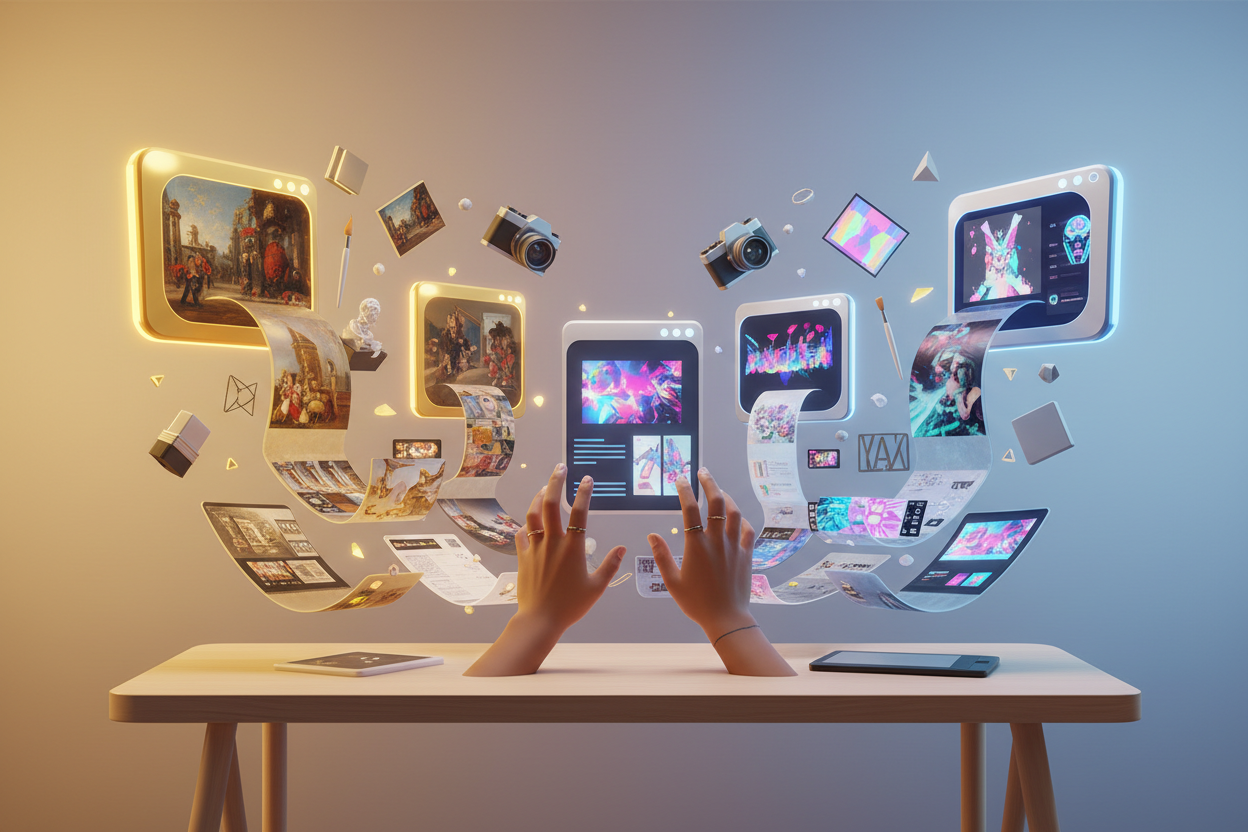
In this comprehensive comparison, we'll dive deep into Midjourney's capabilities and pit it against the best free alternatives available today. Whether you're a professional designer on a tight budget, a hobbyist exploring AI art, or simply curious about what's possible without breaking the bank, this guide will help you make an informed decision.
Understanding Midjourney: The Premium Standard
Midjourney has established itself as the gold standard in AI image generation, and for good reason. This Discord-based platform has consistently delivered high-quality, artistic images that often blur the line between AI-generated content and human-created art. The tool excels at interpreting complex prompts and producing images with remarkable detail, coherent composition, and artistic flair.
What sets Midjourney apart is its sophisticated understanding of artistic styles, lighting, and composition. The platform can seamlessly blend different artistic movements, from photorealistic portraits to abstract expressionist paintings. The latest versions have shown impressive improvements in handling text within images, human anatomy, and maintaining consistency across generated variations.
However, Midjourney comes with a price tag that starts at $10 per month for the basic plan, scaling up to $60 monthly for heavy users. While this might seem reasonable for professionals, it can be a significant investment for casual users or those just starting their AI art journey.
Top Free Alternatives to Midjourney
DALL-E 2 and DALL-E 3 Free Tiers
OpenAI's DALL-E series represents one of the most sophisticated free alternatives available. While the full version requires credits, new users receive free credits monthly, and the integration with Microsoft's Copilot provides additional free access. DALL-E 3, in particular, has made significant strides in understanding natural language prompts and generating coherent, high-quality images.
The strength of DALL-E lies in its ability to understand complex, detailed prompts and translate them into visually coherent results. It excels at photorealistic images and has shown impressive capabilities in handling text generation within images. The safety filters are robust, making it suitable for professional environments where content compliance is crucial.
However, the free tier limitations can be restrictive for heavy users, and the style tends to lean more toward clean, commercial aesthetics rather than the artistic flair that Midjourney is known for.
Stable Diffusion and Its Variants
Stable Diffusion deserves special attention as it's completely open-source and can be run locally on your own hardware. This means unlimited generations once you have the setup running. Platforms like Hugging Face Spaces and various online implementations offer free access to Stable Diffusion models without requiring local installation.
The beauty of Stable Diffusion lies in its flexibility and the vibrant community that has developed around it. Countless custom models, LoRAs (Low-Rank Adaptations), and fine-tuned versions are available for specific styles or subjects. Whether you want anime-style characters, architectural visualizations, or photorealistic portraits, there's likely a specialized model for your needs.
The learning curve can be steeper than other options, especially if you want to run it locally. The quality can vary significantly depending on the model and settings used, and achieving Midjourney-level consistency often requires more experimentation and prompt engineering.
Leonardo AI Free Plan
Leonardo AI offers a generous free tier that provides 150 tokens daily, which translates to approximately 30-75 images depending on the settings used. The platform combines ease of use with powerful features, including fine-tuned models for different styles and use cases.
What makes Leonardo AI particularly appealing is its user-friendly interface and the variety of pre-trained models available. The platform offers models optimized for different purposes: photorealism, illustrations, concept art, and even specific genres like fantasy or sci-fi. The image upscaling and editing features add extra value to the free offering.
The main limitation is the daily token restriction, which can be limiting for users who want to generate many variations or work on multiple projects simultaneously.
Playground AI
Playground AI provides 1000 images per day on their free plan, making it one of the most generous free offerings available. The platform is built on Stable Diffusion but offers a more user-friendly interface with various filters and styles that can be applied with simple clicks.
The platform excels in its simplicity and the variety of artistic filters available. Users can easily experiment with different styles without needing to understand complex prompt engineering. The social features allow users to see and remix others' creations, providing inspiration and learning opportunities.
While the quantity is impressive, the quality can sometimes feel less refined compared to Midjourney or premium alternatives. The interface, while user-friendly, may feel limiting for users who want more granular control over the generation process.
Quality and Style Comparison
When it comes to pure image quality, Midjourney still holds a slight edge, particularly in artistic coherence and aesthetic appeal. The images tend to have a polished, professional look that requires minimal post-processing. The color palettes are often more sophisticated, and the composition feels more intentional.
However, the gap has narrowed significantly. DALL-E 3 matches Midjourney in many scenarios, particularly for photorealistic images and complex scene composition. Stable Diffusion, when used with the right models and settings, can produce results that rival or even exceed Midjourney in specific niches.
The style flexibility varies significantly between platforms. Midjourney has a distinctive aesthetic that, while beautiful, can sometimes feel samey across different prompts. Free alternatives like Stable Diffusion offer more style diversity through their various models, allowing for everything from hyperrealistic photography to stylized illustrations.
Ease of Use and Learning Curve
Midjourney's Discord-based interface can feel awkward initially, but it becomes intuitive once you understand the command structure. The community aspect is both a feature and a potential drawback – while you can learn from others' prompts, your generations are visible to everyone unless you pay for private mode.
Among free alternatives, Leonardo AI and Playground AI offer the most user-friendly experiences, with traditional web interfaces that feel familiar to anyone who has used modern web applications. DALL-E's integration with various platforms makes it accessible, though the credit system can be confusing for new users.
Stable Diffusion presents the steepest learning curve, especially for local installation. However, web-based implementations have made it more accessible, and the investment in learning pays off with unlimited generation capabilities and extensive customization options.
Limitations and Considerations
Free alternatives come with inherent limitations that users must consider. Generation limits, whether daily tokens or monthly credits, can interrupt creative flow and make it challenging to iterate on ideas. Queue times during peak hours can also slow down the creative process.
Content policies vary between platforms, with some free alternatives implementing stricter filters than others. This can impact creative freedom, particularly for artistic or conceptual work that might be flagged by automated systems.
Technical reliability is another consideration. Free services may experience more downtime, slower processing, or reduced priority during high-traffic periods. For professional work with deadlines, these limitations can be significant.
Making the Right Choice for Your Needs
The decision between Midjourney and free alternatives ultimately depends on your specific use case, budget, and quality requirements. For professional designers working on client projects with tight deadlines, Midjourney's consistency and reliability might justify the subscription cost. The time saved on achieving desired results could offset the monthly fee.
For hobbyists, students, or those exploring AI art as a creative outlet, free alternatives provide excellent starting points. The combination of Stable Diffusion for unlimited local generation and DALL-E or Leonardo AI for quick, high-quality results can cover most creative needs without any financial investment.
Consider starting with free alternatives to understand your usage patterns and requirements. Many users find that a hybrid approach works best – using free tools for experimentation and ideation, then moving to premium options for final, high-stakes projects.
The Future of AI Creative Tools
The landscape of AI creative tools is evolving rapidly. Free alternatives are continuously improving, with new models and capabilities being released regularly. Open-source developments in particular are democratizing access to cutting-edge AI art generation.
We're seeing increased specialization, with tools optimized for specific use cases like logo design, character creation, or architectural visualization. This trend suggests that the future might favor a toolkit approach rather than relying on a single, general-purpose tool.
Integration with traditional creative software is also improving, making AI tools more seamlessly part of existing creative workflows rather than standalone applications.
The creative AI landscape offers something for everyone, regardless of budget constraints. While Midjourney remains a premium option with undeniable quality advantages, free alternatives have reached a level of sophistication that makes them viable for most creative applications. The key is understanding your specific needs, experimenting with different options, and choosing the tools that best fit your creative workflow and budget. As these technologies continue to evolve, the distinction between premium and free options may become less significant, ultimately benefiting creators at every level.
0 Response to "Creative AI Tools Comparison: Midjourney vs Free Alternatives"
Post a Comment