5 Midjourney Alternatives That Offer Free Trials: Your Gateway to AI Art Creation
Let's be honest – Midjourney has taken the AI art world by storm, but it's not the only player in town. Whether you're a digital artist looking to expand your toolkit, a content creator seeking fresh visuals, or simply someone curious about AI-generated art, you've probably wondered what other options exist beyond Midjourney's subscription model.
The good news? There are several powerful alternatives that won't ask for your credit card upfront. These platforms offer free trials or freemium models that let you dip your toes into the AI art waters without any financial commitment. I've spent countless hours testing various AI art generators, and today I'm sharing five standout alternatives that genuinely compete with Midjourney's capabilities.
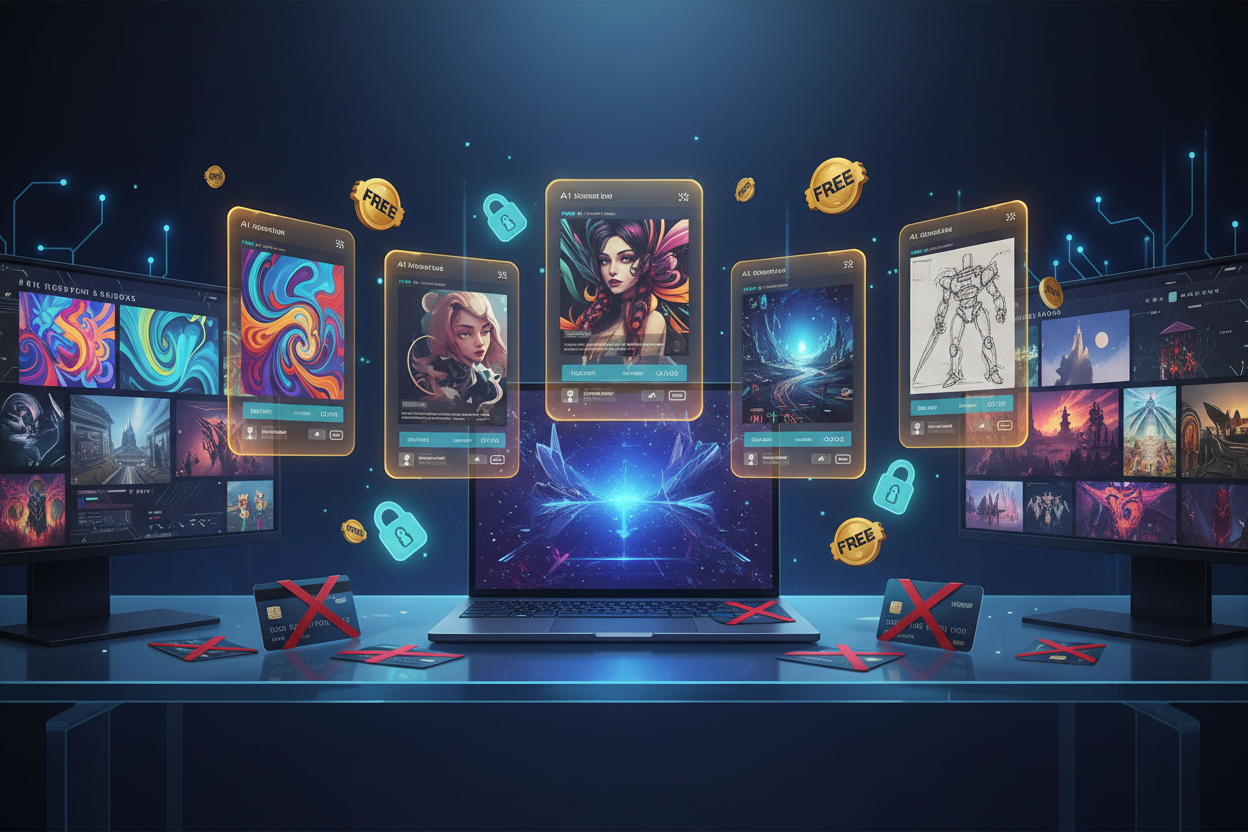
From photorealistic portraits to abstract masterpieces, these tools can help you create stunning visuals that rival anything you'd produce with more expensive platforms. Let's dive into each option and discover which one might become your new creative companion.
What Makes a Great Midjourney Alternative?
Before we jump into the specific platforms, it's worth understanding what we should look for in a quality AI art generator. Having tested dozens of these tools, I've learned that the best alternatives share several key characteristics.
First and foremost, image quality matters tremendously. The AI should produce crisp, detailed images that don't look obviously artificial or glitchy. Resolution capabilities are equally important – you want images that look professional whether you're using them for social media posts or large-scale prints.
User interface design can make or break your experience. The best platforms strike a balance between powerful features and intuitive controls. You shouldn't need a computer science degree to generate beautiful art, but you also want enough customization options to bring your unique vision to life.
Speed is another crucial factor that often gets overlooked. When inspiration strikes, you don't want to wait fifteen minutes for each image to render. The most effective AI art tools deliver results quickly without sacrificing quality.
DALL-E 2: OpenAI's Creative Powerhouse
OpenAI's DALL-E 2 stands as one of the most sophisticated AI art generators available today. What immediately struck me about this platform is its incredible ability to understand complex prompts and translate them into coherent, artistic images.
The free trial offers 50 credits during your first month, with 15 additional credits added each subsequent month. Each credit generates four image variations, giving you plenty of room to experiment with different styles and concepts. This generous allocation means you can really put the platform through its paces without feeling rushed.
Where DALL-E 2 truly shines is in its interpretation of nuanced prompts. You can request specific artistic styles, unusual combinations of objects, or even abstract concepts, and the AI consistently delivers results that feel intentional rather than random. The platform excels particularly well at creating realistic human faces and intricate architectural scenes.
The editing capabilities set DALL-E 2 apart from many competitors. The inpainting feature allows you to modify specific portions of generated images, while the outpainting tool can extend images beyond their original borders. These features transform the platform from a simple generator into a comprehensive creative tool.
However, DALL-E 2 does have some limitations. The content policy is quite strict, which can sometimes flag innocent prompts unexpectedly. Additionally, the resolution is capped at 1024x1024 pixels, which might feel restrictive for users planning large-format prints.
Stable Diffusion: Open Source Innovation
Stable Diffusion represents something unique in the AI art space – a completely open-source solution that you can run locally on your own computer. This approach offers unprecedented control and unlimited usage once you've set it up properly.
The learning curve is steeper than other platforms, but the payoff is substantial. Unlike subscription-based services, Stable Diffusion doesn't limit your monthly generations or charge per image. Once installed, you can create as many images as your hardware can handle.
What fascinates me most about Stable Diffusion is the active community surrounding it. Developers continuously create new models, styles, and features that expand the platform's capabilities. You'll find specialized models for anime art, photorealistic portraits, architectural visualization, and countless other niches.
The platform supports various interfaces, from command-line tools for technical users to user-friendly web interfaces that feel more approachable. Popular implementations like Automatic1111 provide extensive customization options while maintaining relative ease of use.
For users who prefer not to handle local installation, several cloud-based services offer Stable Diffusion access through web browsers. Platforms like DreamStudio provide official access with free credits for new users, while services like Hugging Face offer community-hosted versions.
The main drawback is the initial setup complexity. Getting Stable Diffusion running locally requires some technical knowledge and decent computer hardware. However, for users willing to invest the time, it offers unmatched flexibility and cost-effectiveness.
Leonardo AI: The Artist's Digital Studio
Leonardo AI positions itself as a comprehensive creative platform rather than just an image generator, and this approach really shows in its feature set. The platform offers 150 free credits daily, which is remarkably generous compared to most alternatives.
The interface feels purpose-built for artists and designers. Rather than overwhelming users with technical parameters, Leonardo AI organizes its features around creative workflows. You can easily switch between different artistic styles, adjust composition elements, and fine-tune results using intuitive controls.
One standout feature is the platform's model variety. Leonardo AI provides access to numerous specialized models optimized for different art styles and use cases. Whether you're creating fantasy characters, architectural visualizations, or abstract art, there's likely a model specifically trained for your needs.
The real-time generation preview sets Leonardo AI apart from many competitors. As you type your prompt, the platform provides instant previews of potential results, helping you refine your ideas before committing credits to full generation. This feature significantly speeds up the creative process and reduces wasted generations.
Leonardo AI also excels in batch processing. You can queue multiple variations of an idea and let the platform work through them systematically. This approach is particularly valuable when exploring different artistic directions for a single concept.
The community aspect adds another layer of value. Users can browse galleries of community-created art, complete with the prompts used to generate them. This feature serves as both inspiration and education, helping newcomers understand effective prompting techniques.
Playground AI: Creative Freedom Unleashed
Playground AI takes a refreshingly open approach to AI art generation, offering 1000 free images per day – a limit so generous that most users will never reach it during casual exploration. This abundance removes the anxiety of "wasting" credits on experimental ideas.
The platform's strength lies in its balance of simplicity and power. New users can start creating immediately with basic prompts, while experienced artists can dive deep into advanced settings like CFG scale, sampling methods, and seed control. This scalability makes Playground AI suitable for users across all skill levels.
What impressed me most during testing was the consistent quality across different art styles. Whether generating photorealistic portraits, cartoon illustrations, or surreal abstract pieces, Playground AI maintains high standards and attention to detail. The color reproduction is particularly noteworthy, with vibrant, well-balanced palettes that rarely require post-processing.
The collaborative features distinguish Playground AI from more isolated platforms. Users can easily share their creations, remix others' work, and participate in community challenges. This social aspect transforms AI art creation from a solitary activity into a shared creative experience.
Playground AI also offers excellent mobile support through responsive web design. While not a dedicated app, the mobile interface works smoothly for both browsing community art and creating your own pieces on the go.
The platform's commitment to user education deserves special mention. Comprehensive tutorials, prompt guides, and style explanations help users improve their skills rather than leaving them to figure everything out independently.
Bing Image Creator: Microsoft's Surprise Entry
Microsoft's integration of AI art generation into Bing might seem like an afterthought, but Bing Image Creator has evolved into a surprisingly capable platform. Built on DALL-E technology, it offers many of the same quality benefits while being completely free to use.
The integration with Microsoft's ecosystem provides unique advantages. Images can be easily saved to OneDrive, shared through Microsoft Teams, or incorporated into Office documents. For users already embedded in Microsoft's productivity suite, this seamless workflow integration is incredibly valuable.
Bing Image Creator operates on a "boost" system rather than strict credit limits. Users receive a certain number of boosts that provide faster generation times, but even without boosts, the platform continues generating images – they just take longer to process. This approach ensures you're never completely blocked from creating.
The prompt understanding capabilities rival dedicated AI art platforms. Bing Image Creator handles complex descriptions well and consistently produces images that match user intentions. The platform seems particularly strong with realistic scenes and portraits, though it handles stylized art competently as well.
Safety features are robust without being overly restrictive. The content filtering strikes a reasonable balance between preventing misuse and allowing legitimate creative expression. I've rarely encountered false positives during normal use.
The main limitation is customization depth. Unlike specialized platforms, Bing Image Creator doesn't offer extensive parameter control or style fine-tuning. However, for users seeking straightforward AI art generation without complexity, this simplicity can actually be an advantage.
Choosing the Right Platform for Your Needs
After extensive testing, I've found that the "best" alternative depends heavily on your specific requirements and creative goals. Each platform excels in different areas, making the choice more about matching features to your workflow than finding a universally superior option.
For users prioritizing image quality and sophisticated prompt interpretation, DALL-E 2 remains hard to beat. The editing capabilities and consistent results make it ideal for professional applications where reliability matters most.
Technical users and those seeking unlimited generation will find Stable Diffusion's open-source approach most appealing. The initial complexity pays dividends in long-term flexibility and cost savings.
Artists and designers benefit most from Leonardo AI's creative-focused interface and generous daily credits. The specialized models and real-time previews streamline the creative process significantly.
Casual users and experimenters will appreciate Playground AI's abundance of free generations and community features. The platform removes barriers to exploration and learning.
Users embedded in Microsoft's ecosystem should seriously consider Bing Image Creator, especially given its seamless integration and completely free access model.
Getting Started: Tips for Success
Regardless of which platform you choose, certain strategies will improve your results across all AI art generators. Effective prompting is both an art and a science, requiring practice and patience to master.
Start with clear, descriptive language that paints a vivid picture of your desired outcome. Instead of "cool robot," try "sleek chrome robot with glowing blue eyes standing in a futuristic cityscape at sunset." Specific details guide the AI toward your vision more effectively than vague concepts.
Experiment with artistic style references to achieve consistent aesthetics. Mentioning specific artists, art movements, or visual styles helps the AI understand the mood and technique you're seeking. Terms like "in the style of Studio Ghibli" or "photorealistic portrait" provide valuable context.
Don't be afraid to iterate and refine your prompts based on initial results. AI art generation is inherently experimental, and the best results often come from multiple attempts with slight variations.
Take advantage of community resources on each platform. Studying successful prompts from other users accelerates your learning curve and exposes you to techniques you might not discover independently.
The Future of AI Art Creation
The AI art landscape continues evolving rapidly, with new platforms and features emerging regularly. These five alternatives represent the current state of accessible AI art generation, but the field will undoubtedly advance further in the coming months and years.
What excites me most about this space is the democratization of creative tools. Technologies that once required expensive software and years of training are now accessible to anyone with an internet connection and creative curiosity. This accessibility is fostering new forms of artistic expression and enabling creators who might never have considered themselves "artists" to produce compelling visual content.
Whether you're looking to enhance your professional projects, explore personal creativity, or simply satisfy curiosity about AI capabilities, these platforms provide excellent starting points. Each offers unique strengths and approaches to AI art generation, ensuring that you can find a tool that matches your specific needs and creative vision.
The free trial periods and generous credit allocations mean you can thoroughly test each platform without financial risk. I encourage you to experiment with multiple options – you might discover that different platforms excel for different types of projects, leading you to use several tools in your creative workflow.
As AI art technology continues advancing, these platforms will likely become even more powerful and accessible. Starting your journey now positions you to grow alongside these tools and develop skills that will become increasingly valuable in our visually-driven digital world.
0 Response to "5 Midjourney Alternatives That Offer Free Trials"
Post a Comment